Drone inspection cost vs traditional methods is the first question most companies ask when evaluating the switch. After completing more than 10,000 inspections across the United States, we’ve collected substantial cost data. The numbers tell a clear story..
Cell Tower Inspection Costs
Traditional climber inspection: $800-$1,500 per tower
Drone inspection: $350-$600 per tower
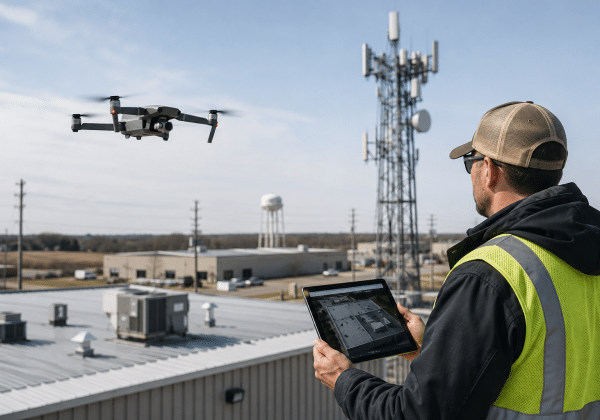
A two-person crew can climb and inspect one tower per day, maybe two if they’re close together and the weather cooperates. Our drone crews routinely complete 4-6 tower inspections per day, weather permitting.
The cost difference is significant, but the bigger advantage is speed. When you need to inspect 50 towers across a region, traditional methods might take 6-8 weeks. We’ve completed similar projects in under two weeks. That timeline compression has real value when you’re planning maintenance windows or responding to storm damage.
Downtime comparison: Climbing requires taking antennas offline during the inspection. Drone inspections can be performed with towers fully operational, which matters significantly for carrier-grade infrastructure where every minute of downtime has a dollar cost.
Utility Transmission Line Inspections
Helicopter patrol: $1,200-$2,000 per mile
Ground crew with bucket trucks: $2,500-$4,000 per mile
Drone inspection: $600-$1,200 per mile
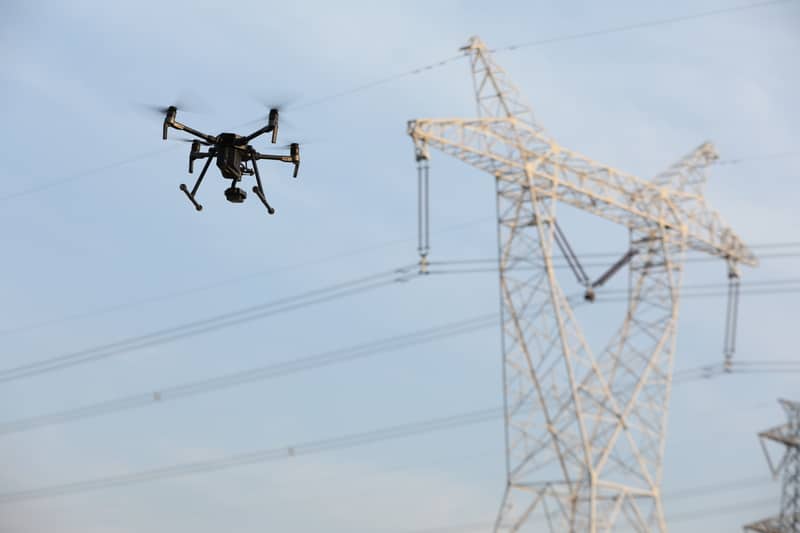
Helicopters are fast but provide limited close-up detail unless you’re making multiple passes, which drives up cost. Ground crews with bucket trucks are thorough but slow—roughly 2-3 miles per day in accessible terrain. Drone operations typically cover 5-8 miles per day with high-resolution imagery of every structure, insulator, and conductor span.
We’ve run parallel comparisons on several utility projects where traditional helicopter patrols missed defects that showed up clearly in our detailed drone imagery. A cracked insulator or damaged conductor tie might be invisible from 100 feet in a moving helicopter but obvious in a stabilized 4K image captured at 15 feet.
Roof Inspections
Traditional ladder/walking inspection: $300-$800 per roof
Drone inspection: $150-$400 per roof
For insurance claims and property assessments, drones deliver better documentation at lower cost. A human inspector walking a steep or damaged roof introduces liability risk—insurance carriers are increasingly requiring fall protection systems even for simple visual inspections, which adds cost and complexity.
Thermal imaging adds another dimension. We can identify moisture intrusion, insulation gaps, and HVAC equipment problems that aren’t visible from the ground or in standard visual inspections. That’s data you won’t get from a traditional ladder inspection unless you’re specifically bringing thermal cameras up, which almost nobody does.
Solar Farm Inspections
Manual inspection crew: $0.008-$0.012 per watt of capacity
Drone thermal inspection: $0.003-$0.006 per watt
For a 50MW solar farm, that’s the difference between $400,000-$600,000 for manual inspection versus $150,000-$300,000 for comprehensive drone-based thermal imaging. Manual crews might check 10,000-15,000 panels per day. Our drone operations routinely scan 50,000-80,000 panels per day with thermal imaging that identifies hot spots, bypass diode failures, and tracker misalignment — AI-powered analysis makes this even faster.
The defect detection rate tells the real story. Manual visual inspections catch obvious failures—broken glass, disconnected wiring—but miss the degraded cells and junction box issues that thermal imaging identifies before they become complete failures.
Wind Turbine Inspections
Rope access technicians: $3,000-$5,000 per turbine
Drone inspection: $800-$1,500 per turbine
Rope access is thorough, and technicians can perform minor repairs during the inspection. But it’s slow—one turbine per day—and weather-dependent in ways that ground drone operations often aren’t. High winds that prevent rope work might be fine for drone operations if we’re imaging from a safe distance.
The downtime factor is significant. Rope access requires turbine shutdown for 8-12 hours. Drone inspections typically require 2-4 hours of shutdown, and in some cases we can inspect operating turbines if we’re checking for specific issues that don’t require close proximity to rotating blades.
What the Costs Don’t Show
Price per inspection is one metric. Speed, data quality, safety, and scalability are others.
We’ve never had a pilot fall off a tower, get caught in rotating machinery, or contact an energized conductor. Our ground crews have been hit by vehicles while working traditional bucket truck operations. The safety improvement is real, not theoretical.
The data quality comparison isn’t straightforward. A skilled technician climbing a tower or walking a roof sees things that a camera might miss—rust stains, subtle vibrations, unusual sounds. But they also see one tower at a time, and their observations are documented in handwritten notes or verbal reports that are difficult to compare across hundreds of structures.
Drone data is systematic, time-stamped, geotagged, and archived. We can compare the same insulator across five years of annual inspections and watch the crack propagate. That’s difficult to do with traditional inspection methods where different technicians write different types of notes in different formats.
The Break-Even Question
Companies ask us regularly whether they should build internal drone programs or keep outsourcing inspections. The honest answer depends on inspection volume and technical complexity.
If you’re inspecting fewer than 200 structures per year, outsourcing almost always makes more sense. The equipment, training, insurance, and pilot retention costs make small internal programs expensive per inspection.
Once you cross 500-1,000 inspections annually and have consistent year-round work, the economics shift. But building the capability requires real investment—not just in drones and sensors, but in pilots who can manage complex operations, process data into actionable reports, and stay current with evolving regulations.
For most organizations, that’s a distraction from core business. We’ve completed more than 10,000 utility inspections because that’s what we do. Your business is running utilities, managing properties, or operating wind farms. Let us handle the inspections.
Ready to Compare Your Specific Project Costs?
Every infrastructure inspection has unique requirements—access constraints, data deliverable needs, timeline requirements, and safety considerations that affect pricing. We’ve provided the general ranges above based on our actual project history, but your specific costs will depend on project scope and location.
Get a detailed quote for your inspection project →
Related Reading
- How Drone Cell Tower Inspection Works: A Walkthrough — The full process behind those tower inspection numbers.
- NDVI Crop Monitoring with Drones — How we deliver value in agriculture beyond just flying fields.
- AI in the Drone Industry — The technology making drone inspections faster and more accurate.